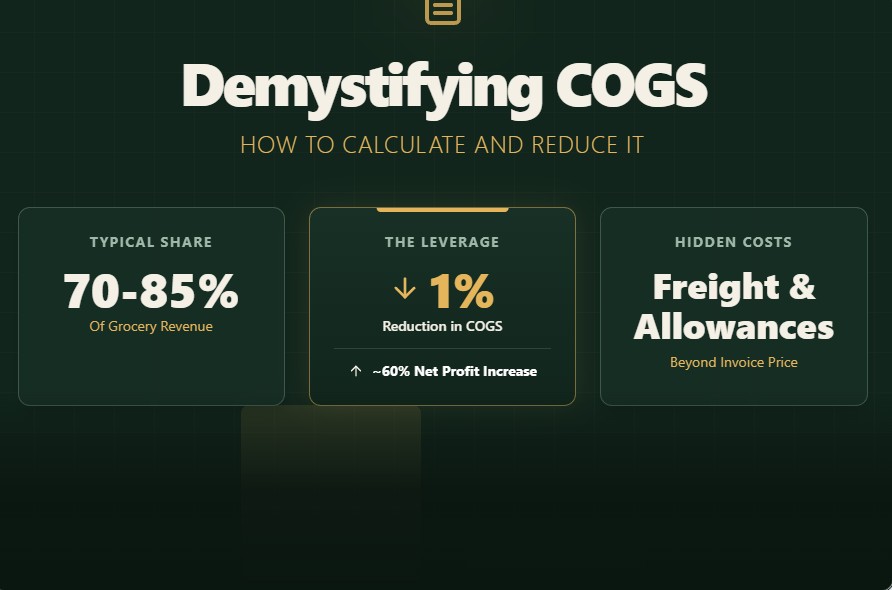
COGS for Grocery Stores: How to Calculate and Reduce It
Cost of goods sold is the single largest line on a grocery store’s income statement — typically 70% to 85% of revenue, depending on format and category mix. That’s the…
Cost of goods sold is the single largest line on a grocery store’s income statement — typically 70% to 85% of revenue, depending on format and category mix. That’s the…
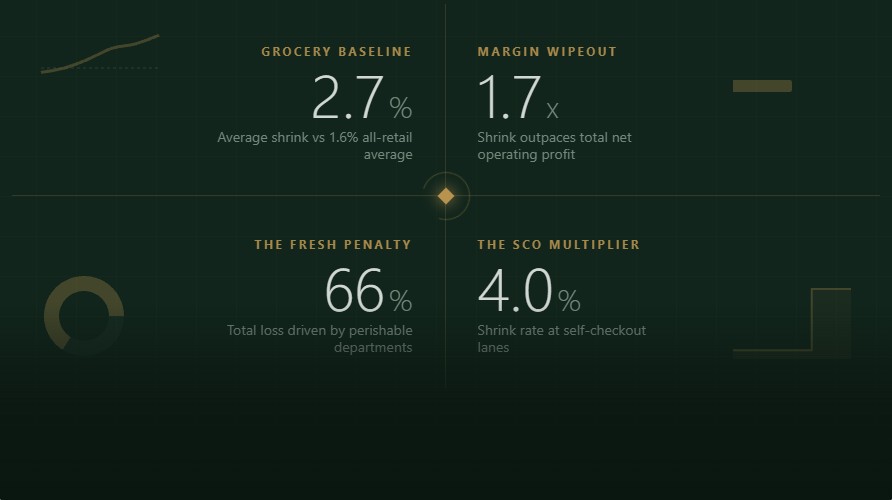
Grocery stores lose 1.76% to 3.1% of sales to shrinkage, roughly double the all-retail average — and unlike apparel or electronics, most of that loss isn’t theft at all. It’s…
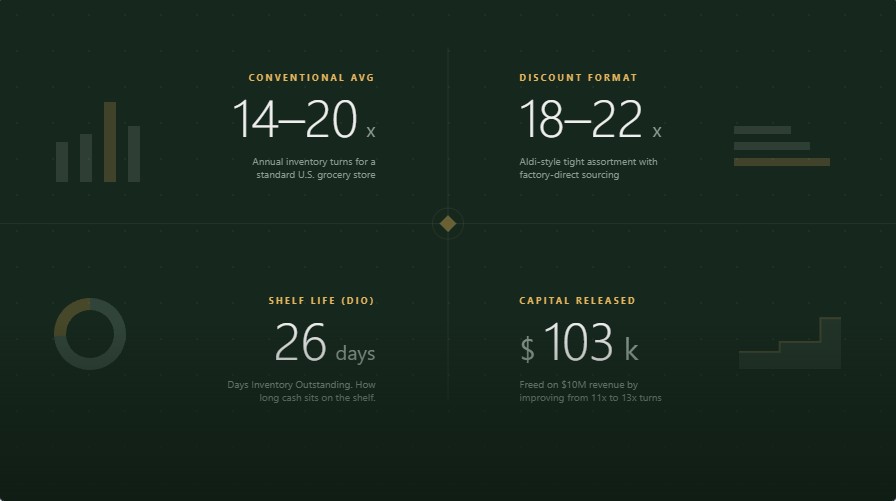
The average U.S. grocery store turns its inventory 14 to 20 times per year — roughly every 18 to 26 days — compared to 3–5 turns for furniture retail or…
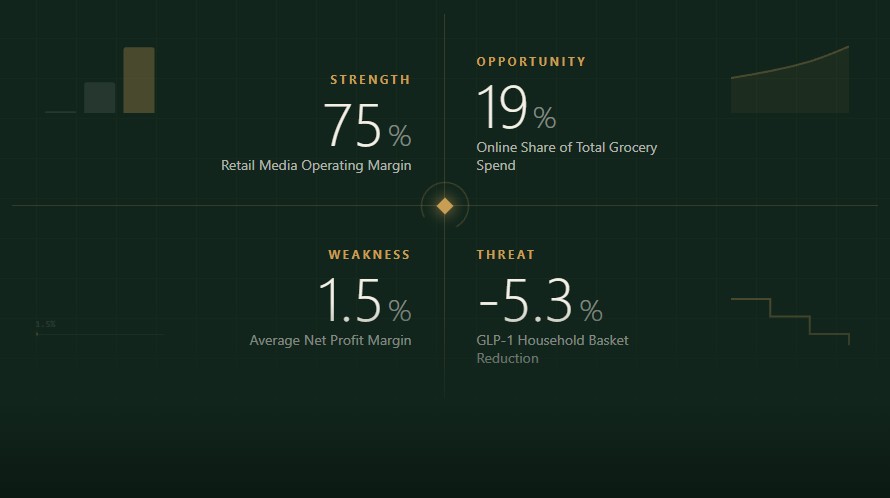
Grocery is a $963 billion U.S. industry that most operators still run on gut instinct. That’s the paradox: the sector is large, stable, and essential, yet net margins sit at…
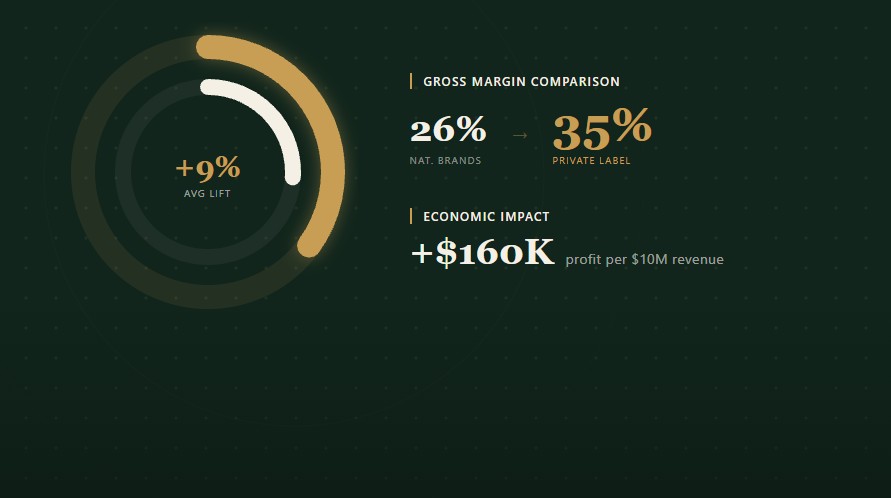
Private label means products under your brand instead of national brands like Coke, Kellogg’s, or Kraft. The economics are straightforward: national brands carry ~26% gross margins, while private label runs…